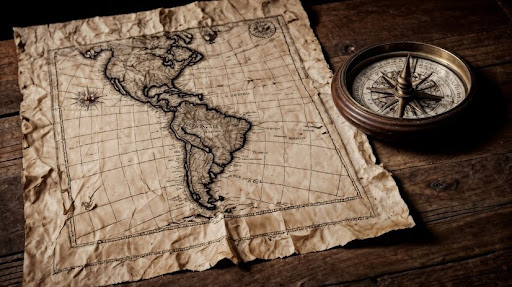
North America’s history is rich and diverse, spanning thousands of years and shaped by a complex interplay of indigenous cultures, European colonization, and the formation of modern nations. Long before European contact, the continent was home to a wide array of Native American civilizations, such as the Maya, Aztec, and Inuit in various regions, each with its own unique culture, language, and societal structure. The arrival of European explorers, starting with Christopher Columbus in 1492, marked the beginning of significant changes. Colonization by the Spanish, British, French, and Dutch followed, leading to the establishment of settlements, trade, and, eventually, conflicts over territory. This period saw the displacement and decline of many indigenous populations due to warfare, disease, and forced relocation. In the 18th century, the American colonies revolted against British rule, culminating in the American Revolution and the founding of the United States in 1776. Canada, meanwhile, developed as a British colony before gaining its independence in stages, finally achieving full sovereignty in 1982. Mexico, under Spanish rule for centuries, gained its independence in 1821 after a long and bloody struggle. North America’s history also includes significant moments like the expansion westward, the Civil War in the U.S., the Industrial Revolution, the civil rights movements, and the development of modern democracies. Throughout this history, the continent has become a global powerhouse, shaping international politics, economics, and culture.